
News

New ACROBATIC-Affiliated Project Focuses on Sexual Health in Bladder Cancer Survivorship
ACROBATIC is pleased to welcome a new affiliated research project within CFA3: Survivorship.

ACROBATIC at Folkemødet 2026
How much of modern cancer surgery is driven by the surgeon, and how much by technology?

Important Update: Application Deadline Postponed
Please note that the ACROBATIC application deadline has been postponed from August 2026 to 15 November 2026 .

ACROBATIC awards travel grants to support international research dissemination
ACROBATIC continues to support early-career researchers in sharing their work internationally. The latest recipients of the ACROBATIC travel grants are Morten Sahlertz and Rasmus Due Petersson, enabling them to present their research at leading international conferences.

Prehabilitation in Focus: Strengthening Patients Before Cancer Surgery
Prehabilitation is gaining increasing attention as a key strategy to improve outcomes for patients undergoing cancer treatment. In the latest annual research report (2025) from the Danish Cancer Society, this important theme is highlighted, showcasing how targeted interventions before treatment can enhance recovery, reduce complications, and improve quality of life.

Changes in the Executive Committee
We regret to announce that we have had to say goodbye to our Deputy Chair, Pernille Tine Jensen, following a long period of illness. We would like to extend our sincere gratitude to Pernille for her tremendous dedication, her many valuable ideas, and her wonderful, infectious approach to life. She has made a lasting impact on ACROBATIC and will be greatly missed. As CFA2 Lead Thomas Baad-Hansen (Department of Orthopaedic Surgery, Tumor Section, Aarhus University Hospital) has taken on the role of Deputy Chair, we have appointed a Co-Lead for CFA2, as the group has grown considerably. The new CFA2 Co-Lead is Tine Engberg Damsgaard (Department of Plastic Surgery, Hospital Lillebælt – Vejle and Odense University Hospital). Both Tine and Thomas are well-known members of the Executive Committee and have been part of ACROBATIC since its beginning. We are also pleased to welcome a new member to the Executive Committee: Michael Achiam from Rigshospitalet, who represents upper gastrointestinal cancer (Department of Transplantation and Diseases of the Digestive System, Department of Abdominal Surgery and Transplantation, and the Center for Cancer and Organ Diseases).
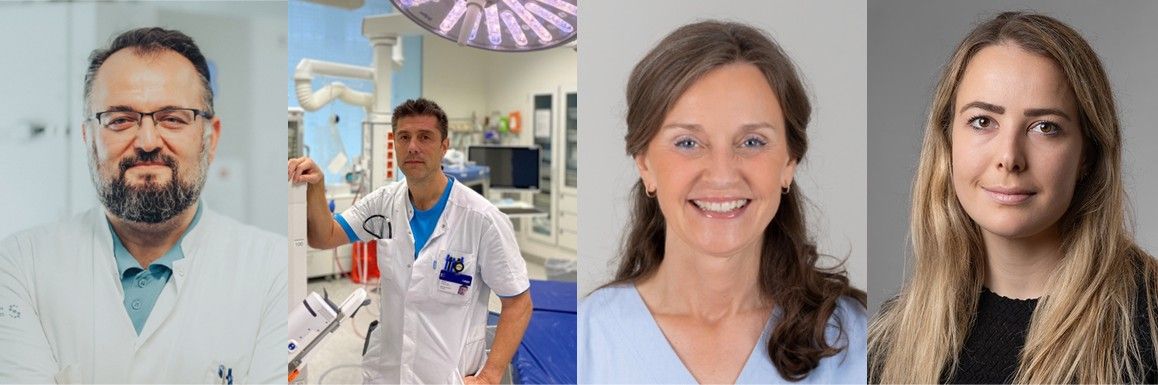
Four New Grants Awarded in ACROBATIC’s January 2026 Call
In the most recent funding round with a deadline on 16 January 2026, ACROBATIC received a total of eight applications. Following a competitive evaluation process, four new grants have been awarded to high-quality research projects spanning all three of ACROBATIC’s clinical focus areas: prehabilitation and preoperative risk assessment (CFA1), surgical innovation and technique (CFA2), and survivorship (CFA3).

ACROBATIC Welcomes Five New Affiliated Research Projects
ACROBATIC is pleased to welcome five new affiliated research projects that address key challenges in modern cancer surgery. Together, the projects focus on improving patient outcomes through better risk assessment, optimised perioperative care, innovative surgical strategies, and high quality clinical data with direct relevance to everyday practice. WP 1.9 WP leader: Michael Achiam , Professor, DMSc., Ph.d., MD, Department of Digestive Diseases, Transplantation and General Surgery, Rigshospitalet, Denmark. Title: Preoperative evaluation and prehabilitation in esophagogastric cancer surgery. Abstract: Background: Esophagogastric cancer predominantly affects older adults, and despite advances in surgical care, >50% of patients undergoing curative surgery develop postoperative complications. Complications worsen survival and quality of life and substantially increase healthcare costs (up to 241% after complicated esophagectomy). The preoperative period provides a window for optimisation, yet evidence for prehabilitation remains inconsistent, partly due to heterogeneous, single-modality interventions and inclusion of relatively fit patients. A decentralised, multimodal approach targeting high-risk patients may improve outcomes and reduce social inequality in line with Kræftplan V.
New International Vulvar Cancer Project Joins ACROBATIC
We are excited to welcome a new international research project to ACROBATIC. Focusing on key predictors of lymph node metastasis and recurrence in vulvar cancer, the study aims to advance more personalized and less aggressive treatment strategies. Read the full abstract below. WP 2.30 WP leader: Liselotte Petersen Due , Kolding Sygehus, Gynecologic/Obstetric deparment. Title: Impact of lymph vascular space invasion and tumor location on risk of lymph node metastases and recurrence in patients with vulvar cancer. Abstract: Purpose: This study aims to identify a subgroup of Vulva cancer (VC) patients with a low risk of lymph node metastases who may benefit from less aggressive treatment. We aim to investigate following; 1) Predictive factors of lymph node involvement and in newly diagnosed VC patients with a special focus on drainage patterns and lympho-vascular space invasion (LVSI), and 2) risk factors for metastasis in women with early-stage vulvar cancer and 3) Risk factors for regional and distant recurrence in patient with early-stage vulva cancer. Method: The study is an international retrospective observational population-based cohort study. Study 1 is based on data from VC patients identified in the Danish Gynecological Cancer Database (DGCG). Study II and III include population-based data on VC patients identified from the Netherlands Cancer Registry (NCR) and the Swedish Quality Registry for Gynecologic Cancer (SQRGC). Results: The overall purpose is to identify a low-risk group of VC patients who may benefit from a less aggressive treatment strategy than applied today.

ACROBATIC congratulates Marie Øbo Larsen, PhD student at Aarhus University, for her oral presentation at the Nordic Melanoma Meeting 2025
ACROBATIC congratulates Marie Øbo Larsen, PhD student at Aarhus Universitet, who received an ACROBATIC travel grant to participate in the Nordic Melanoma Meeting 2025 , held 10–12 November 2025 in Tromsø, Norway , where she delivered an oral presentation of her translational melanoma research. Marie presented her work entitled: “Peri-operative Treatment with Tranexamic Acid (TXA); Prognostic and Treatment-Related Impact of the Plasmin(ogen) Pathway in Melanoma”.